
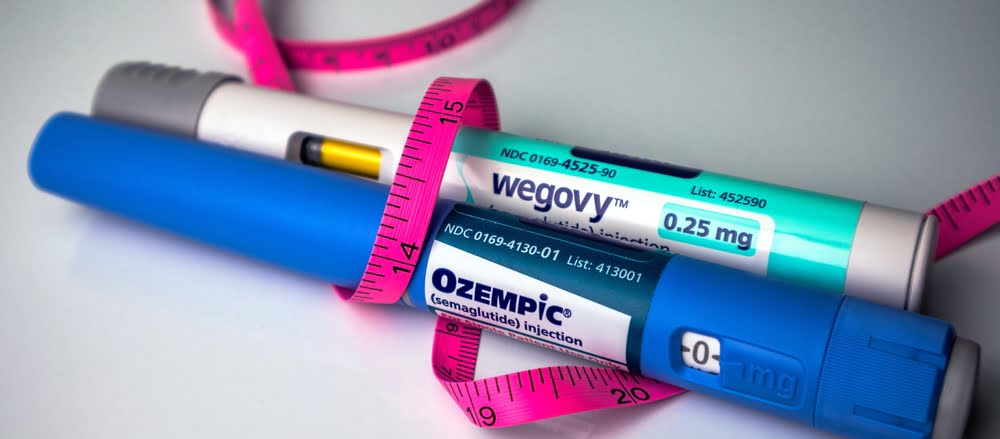

Wegovy and Ozempic semaglutide injection pens side by side wrapped in a pink measuring tape representing the comparison of Ozempic vs Wegovy for weight loss and diabetes treatment

Ozempic vs Wegovy: What Is the Difference and Which One Is for Weight Loss?

Weight Loss

If you have been researching prescription weight loss medications, you have almost certainly encountered both Ozempic and Wegovy. They are frequently mentioned in the same breath, often confused with each other, and occasionally treated as interchangeable. They are not interchangeable, and understanding the difference between them matters if you are trying to make informed decisions about your treatment options.

The short version is this: Ozempic and Wegovy contain the same active ingredient, semaglutide, but they are different medications with different FDA approvals, different doses, and different intended uses. One was designed for type 2 diabetes management. The other was specifically designed and approved for chronic weight management.

This guide walks through exactly how they differ, why that difference matters clinically and practically, and how to know which one may be relevant to your situation.

1. What Ozempic and Wegovy Have in Common

Both Ozempic and Wegovy are manufactured by Novo Nordisk and contain semaglutide as their active ingredient. Semaglutide is a GLP-1 receptor agonist that mimics the action of glucagon-like peptide-1, a hormone the body produces after eating that signals fullness, slows digestion, and helps regulate blood sugar.

Both medications are administered as once-weekly subcutaneous injections. Both follow a gradual dose escalation schedule designed to minimize gastrointestinal side effects during the adjustment period. Both have a well-established safety profile supported by large-scale clinical trials. And both have produced meaningful results in the areas they were designed to address.

Because they share the same mechanism of action and the same active ingredient, many people assume they are simply the same drug sold under different names. The reality is more nuanced and has significant practical implications.

2. Ozempic vs Wegovy: The Key Differences

The differences between Ozempic and Wegovy come down to four primary factors: FDA indication, approved dose, the clinical population each was designed for, and how insurance and access considerations play out.

FDA Indication

Ozempic received FDA approval in 2017 for the treatment of type 2 diabetes in adults, specifically to improve glycemic control and to reduce the risk of major cardiovascular events in adults with type 2 diabetes and established cardiovascular disease.

Wegovy received FDA approval in 2021 for chronic weight management in adults with a body mass index of 30 or higher, or 27 or higher with at least one weight-related health condition such as high blood pressure, type 2 diabetes, or high cholesterol.

This distinction is important because it determines which condition each medication is being prescribed to treat, which in turn affects prescribing criteria, insurance coverage, and the clinical context in which each is used.

Approved Maximum Dose

This is the most clinically significant difference. According to prescribing information reviewed on the FDA website, the maximum approved maintenance dose of Ozempic for diabetes management is 2 mg weekly. The maximum approved maintenance dose of Wegovy for weight management is 2.4 mg weekly.

The higher dose approved for Wegovy is not incidental. Clinical trials demonstrated that the 2.4 mg dose produces significantly greater weight loss than lower doses, and the higher dose approval reflects the evidence base that Wegovy’s development program was built on. Patients who are prescribed Ozempic for off-label weight loss and never reach the 2.4 mg dose may therefore be receiving less than the evidence-supported therapeutic dose for weight management.

Clinical Development Program

Ozempic was developed and studied primarily in populations with type 2 diabetes. Its clinical trials focused on glycemic outcomes, cardiovascular outcomes, and safety in that population.

Wegovy was developed and studied specifically in populations with obesity and overweight, without the requirement of a diabetes diagnosis. The pivotal STEP trials that supported Wegovy’s weight loss approval enrolled participants across a range of metabolic profiles and demonstrated an average weight loss of approximately 15 percent of body weight over 68 weeks at the 2.4 mg dose, as published in the New England Journal of Medicine.

3. Which One Is FDA Approved for Weight Loss?

Wegovy is the semaglutide product that carries an FDA approval specifically for chronic weight management. Ozempic is not FDA approved for weight loss, though it contains the same active ingredient.

This distinction matters for several practical reasons. Prescribing Ozempic for weight loss is considered off-label use, which is legal and common in medicine but means the prescriber is using the medication outside its approved indication. Off-label prescribing decisions should be based on clinical judgment and shared decision-making between patient and provider.

It also affects insurance coverage, which will be addressed in more detail in its own section below. 

4. Why Ozempic Is Sometimes Prescribed for Weight Loss

If Wegovy is the weight-loss approved version of semaglutide, why is Ozempic so commonly discussed in the context of weight loss?

Several reasons have contributed to this pattern. First, Wegovy experienced significant supply shortages after its approval in 2021, which led providers to prescribe Ozempic as an alternative for patients seeking semaglutide for weight management. Second, some patients and providers were already familiar with Ozempic from its diabetes indication and initiated it for weight loss before Wegovy became widely available. Third, Ozempic is sometimes more accessible through certain pharmacy channels or insurance pathways than Wegovy.

The clinical reality is that semaglutide at any dose will produce some degree of appetite suppression and weight reduction in most patients. However, patients prescribed Ozempic for weight loss may not reach the 2.4 mg dose that was specifically studied and approved for weight management, which means their results may be more limited than what the Wegovy clinical trial data would suggest. 

5. Dosing Differences and What They Mean

The dose escalation schedules for Ozempic and Wegovy differ in structure and in maximum dose.

Ozempic typically starts at 0.25 mg weekly for the first four weeks, escalates to 0.5 mg, and can be increased to 1 mg and then 2 mg based on clinical need and tolerability. The maximum approved dose for diabetes management is 2 mg weekly.

Wegovy starts at 0.25 mg weekly for the first four weeks, then follows a more gradual escalation through 0.5 mg, 1 mg, and 1.7 mg before reaching the target maintenance dose of 2.4 mg weekly over approximately 16 to 20 weeks. The slower titration schedule for Wegovy was specifically designed with the weight loss patient population in mind, balancing efficacy with gastrointestinal tolerability.

This dose difference is not trivial. The additional 0.4 mg between the maximum Ozempic dose and the Wegovy maintenance dose represents a meaningful increment in appetite suppression and weight loss efficacy. Patients on 2 mg of semaglutide who are not seeing adequate results may actually be candidates for the higher dose available through Wegovy’s approved protocol. 

6. Cost and Insurance Considerations

Both Ozempic and Wegovy are expensive without insurance coverage, with monthly costs before any assistance programs ranging from several hundred to over a thousand dollars.

Insurance coverage differs significantly between the two medications because of their different approved indications. Many insurance plans cover Ozempic for patients with a diagnosis of type 2 diabetes because it has an established cardiovascular outcomes trial and a long track record in diabetes management. Coverage for Wegovy for weight loss is considerably more variable. Some plans cover it, many do not, and Medicare historically excluded weight loss medications from coverage until policy changes began to shift this landscape.

For patients on a direct pay model without insurance coverage, both medications are available at broadly similar cash prices, though this can vary by pharmacy and by whether manufacturer savings programs or other assistance programs are applied.

A qualified provider can help you understand which medication is appropriate for your clinical situation and what the access and cost pathway looks like based on your specific circumstances. 

7. Who Qualifies for Each Medication

Ozempic is indicated for adults with type 2 diabetes. It is not intended as a first-line weight loss medication for patients without diabetes, though providers may prescribe it off-label in some clinical situations.

Wegovy is indicated for adults with a body mass index of 30 or higher, or adults with a body mass index of 27 or higher who also have at least one weight-related health condition such as high blood pressure, dyslipidemia, type 2 diabetes, or obstructive sleep apnea.

A thorough medical evaluation is required before either medication is prescribed. This includes a review of health history, current medications, contraindications, and a discussion of clinical goals. Both medications are contraindicated in patients with a personal or family history of medullary thyroid cancer or multiple endocrine neoplasia syndrome type 2.

For patients who qualify and are ready to explore their options, a medical weight loss consultation is the right starting point for determining which semaglutide product is appropriate for their situation. For patients outside of Maryland, out-of-state telehealth options are available across multiple licensed states. 

8. Frequently Asked Questions

Ozempic is not FDA approved for weight loss in patients without diabetes, but off-label prescribing by qualified providers does occur. If you are seeking semaglutide specifically for weight management and do not have diabetes, Wegovy is the approved option and the one with clinical trial data specifically supporting its use in a weight loss population.

Wegovy’s maximum approved dose of 2.4 mg weekly is higher than Ozempic’s maximum approved dose of 2 mg weekly. Because the higher dose produces greater appetite suppression and weight loss, Wegovy is generally considered more effective for weight management purposes when the full maintenance dose is reached.

Ozempic gained significant public visibility before Wegovy was widely available, and it became associated with weight loss in popular media and social conversation even though Wegovy is the weight-loss-specific approval. Supply issues with Wegovy after its 2021 approval also contributed to providers using Ozempic as an alternative during periods of limited availability.

Coverage varies significantly by insurance plan. Some plans cover Wegovy for patients who meet the approved eligibility criteria. Others exclude it as a weight loss medication. Medicare coverage for weight loss medications has historically been limited, though this has been an area of ongoing policy change. A direct pay or telehealth model can provide access to semaglutide for patients whose insurance does not cover these medications.

Switching from Ozempic to Wegovy is possible and sometimes clinically appropriate, particularly for patients who are on Ozempic for weight loss and have not reached the higher dose available through Wegovy’s approved protocol. This is a decision to make with your provider based on your current response, tolerability, and clinical goals.

Ask which medication is appropriate given your diagnosis and clinical goals, whether your insurance covers one or both, what dose you would be titrated to, and whether there are any clinical factors in your history that make one option preferable over the other. A comprehensive medical weight loss consultation will address all of these questions in the context of your full health picture.

Key Takeaways

Ozempic and Wegovy both contain semaglutide and work through the same GLP-1 receptor mechanism, but they are distinct medications with different FDA approvals, different maximum doses, and different intended clinical populations. Ozempic is approved for type 2 diabetes management with a maximum dose of 2 mg weekly. Wegovy is approved specifically for chronic weight management with a maximum dose of 2.4 mg weekly, which is the dose shown in clinical trials to produce the most significant weight loss outcomes. The confusion between the two medications is understandable given their shared active ingredient, but the differences matter clinically, in terms of insurance coverage, and in terms of which dose a patient is likely to reach. Patients seeking semaglutide for weight loss should discuss with their provider which product is appropriate for their specific situation rather than assuming the two are equivalent.

Not Sure Whether Ozempic or Wegovy Is Right for You?

The answer depends on your health history, your clinical goals, and what your provider determines is most appropriate for your situation. A comprehensive evaluation is the only way to know which semaglutide product fits your needs. Learn more about medical weight loss programs and what a personalized treatment plan looks like from consultation through ongoing care. For patients outside of Maryland, out-of-state consultation options are available across multiple licensed states.

Medical Disclaimer: This article is for informational purposes only and does not constitute medical advice. The content is not intended to diagnose, treat, cure, or prevent any medical condition. Always consult a qualified healthcare provider before starting, stopping, or modifying any medication or treatment plan. Individual results and risks vary based on personal health history and clinical factors.

References

Currently only accepting new clients from: New Mexico, Utah, Minnesota, Maryland, Virginia, Delaware, Colorado, West Virginia, Arizona, Iowa, Florida, Nevada, and Connecticut.